Wednesday, March 23, 2016

Art Print writing and Haiku

Colin Harper
Art Print Writing and Haiku
The picture is painted from the perspective of someone laying underneath a canopy of trees. The trees have brown leaves, and the sky is blue with an orange undertone. I believe it is safe to say that it is Fall in the painting. It reminds me of a time when I was at the park with my sister and cousins. The ambiance was very similar to that of the picture. My sister was playing on a teeter-totter, and somehow managed to chip her tooth. It also reminds me of the Fall Festivals that McBride would put on every year. I would always ride rides and play games at those events. At the end of the events, there was always a fireworks show. The orange in the sky tells me that the sun is beginning to go down. That is my favorite time of day, when it is not fully day yet not fully night. It reminds me of playing catch with my father whenever he would get home from work.


I did my haiku about Dakoda's print. It is full of grays, blacks, and browns.
Haiku
I open my eyes
smoke, fog, and dust surround me
This is how war feels

Hopper Inspired Writing

Colin Harper
Hopper- Inspired Writing


The cop sat down after a long days work, and ordered a coffee. Black, just how he liked it. The old bartender told him that it would be right up. A women in a red dress was sitting in the corner of the bar. She was talking to a generic looking man in a black suite. The cop overheard her seductively asking the man if he would like to have a "nice night". Geez, couldn't she tell he was a cop? He had had too busy of a workday to deal with it. He just let their conversation carry on. He spent his day tracking the footsteps of a wanted mobster, the ringleader of the drug circus in town. He was right on his trail, and catching him would be the break he needed to get a new promotion. He'd spent hours decrypting the codes of messages sent between the culprit and his customers. The man's face was so etched into the cop's mind, that he didn't even notice when the criminal himself left the cafeteria with the girl in the red dress draped all over him. As the man walked out the door, the cop realized his mistake. He bolted out of the door and tackled the man to the ground. The man cried out in shock, and the cop proceeded to handcuff him. He brought him back to the station, where he was interrogated. Nearly two minutes into the questioning, the cop was informed that he had brought in the wrong man. It really had been long day. The cop drove home, and remembered that he hadn't even received his coffee. That was okay, he needed to sleep anyway.

Window Poem

Window Poem

I see the dog across the street, held by a shock collar. It is content in it's small world.
I see brown shingles, overlapping each other other like waves in a sandpaper ocean.
The sky is a mixture of pink and orange hues.
I always feel strong when I am here.
I see leaves dance to the ground from the tree in my yard.
The water tower extends over the treeline, and I desperately want to climb it.
I long to see bigger and greater things from a new point of view.


Friday, March 18, 2016

Artist Piece Inspired Poems

Colin Harper

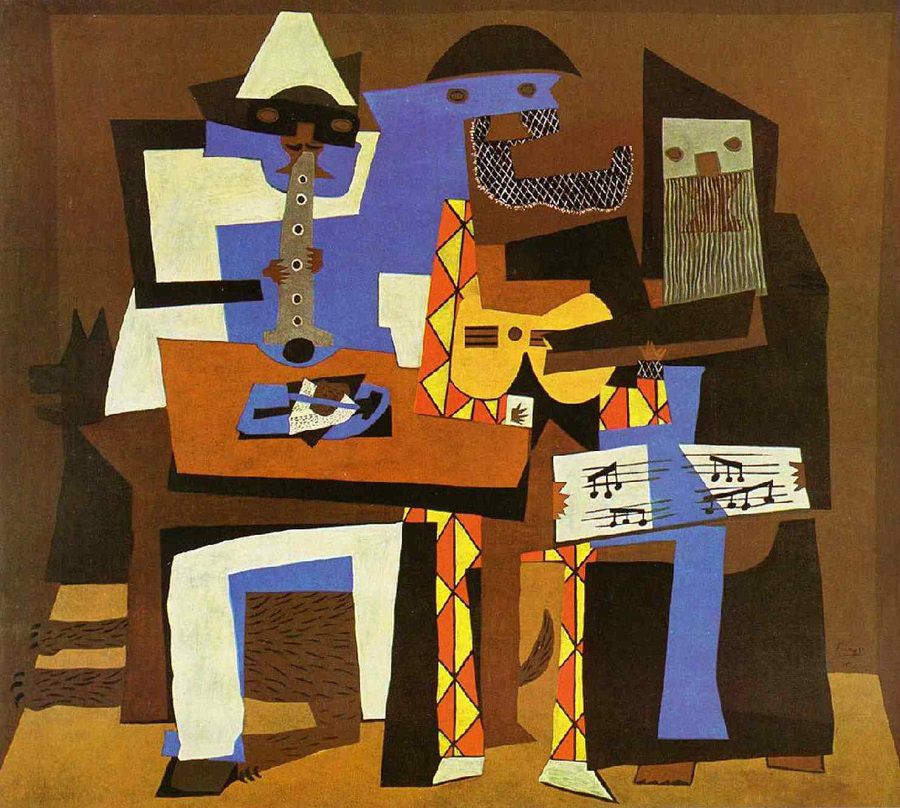
Three men from three different walks of life came together one night.
Each one had their own story, their own hardships.
They each had their own victories, and their own defeats. 
On that night, however, they were one.
They came together, and they played beautiful music into the air.
One man played the flute, and it whispered a light melody into existence.
Another struck a guitar, creating a cavernous noise that rang through their extremity.
The third man sang, his voice bringing life into the music.
No matter the differences the men had, they were in harmony while they played.
When the music was over, they each went their separate ways.
However, they each took a piece of each other as they went.


I had never seen a more solemn man in my entire life. I was driving down the road, on my way home from work when I saw a man sitting on the side of the road. He was in black and tattered clothes, and wielding a guitar. The man was bald, and he looked even more morose in the blue tinted atmosphere. I asked myself what had happened to him. Surely a tragedy had taken place in this man's life. I have seen people devastated after the death of a loved one, or struck with sadness after failing in an endeavor, but never had I seen sadness of this magnitude. Whatever had happened to this man, I prayed would never happen to me. I kept driving, and wondered if I should have stopped to speak to the man. Probably not, I thought to myself, as I would not want to get caught up in his melancholy business. Surely his feeling would rub off on me, and I was not ready to behold that extreme of an emotion. 

Artist Profile: Pablo Picasso

Colin Harper
Pablo Picasso
Pable Picasso was born on October 25, 1881 in Malaga, Spain, to Jose Ruiz and Maria Picasso. His father was a painter and a professor, and his mother's occupation was unknown. He had two siblings, Lola Picasso, and Conchita Picasso. Picasso grew up around the arts, and was adept at painting in his early years. He entered the Royal Academy of San Fernando at age 11. His sister Conchita passed away in 1895, and Picasso was devastated. In 1897 he won a gold medal at a major art exposition. This gave the young Picasso confidence in his artistic ability. Picasso's life was filled with many lovers. He was married and divorced multiple times. His most beloved significant other was named Eva Gouell. She passed away in 1915, and thus began the time known as Picasso's blue period. In his blue period, Picasso painted many sad paintings, and used a majority of blue and dark hues of paint. The Guitarist was created during his blue period. Picasso's most popular medium was paint, however he dabbled in most mediums, including ceramics. He is associated with cubism and 19th and 20th century period art. His most famous paintings, along with The Old Guitarist, are Guernica and Three Musicians. Guernica is a painting depicting Picasso's thoughts on war. Mutilated animals and people cover the canvas. Picasso joined the communist party in his later years, and continued to create art. He had a myriad of partners in his life, but he settled down with Jacqueline Roque for the final years of his life. Picasso died in Mougins, France in 1973.

Monday, February 29, 2016

First and Last Lines Journal Writing

Colin Harper
First and Last Lines

This is the saddest story I have ever heard.
One day, during one week in one certain year, I met someone. That someone and I did some things. We did some fun things, and some not so fun things. Good things happened to us, and bad things happened to us. One day, the someone had to go somewhere, and something happened. I was waiting somewhere else for the same someone to arrive, when that something happened. I felt a strange something somewhere within myself. The story on the news said that something had happened to my someone. I became a very lonesome someone for some time. My someone was now a no one, and so was I. 
Are there any questions?

Thursday, February 25, 2016

First and Last Lines

Colin Harper
First and Last Lines

"This is the saddest story I have ever heard."
This was the first line I chose. It is the first line of The Good Soldier by Ford Madox Ford. He was born on December 17, 1873 and died June 26, 1939. He is best remembered for The Good Soldier, which is widely recognized as one of the greatest 100 novels of all time. It was published in 1915.

 The Good Soldier is a novel of love, and a lack thereof. Within the novel, many characters have affairs. The main character, John, is married to Florence, who cheats on him with multiple people. She eventually commits suicide due to her affairs, as do many other characters in the story. The story is filled with sadness throughout.

I think that I probably wouldn't like this book, because it seems a little bit too sad for me. Also, the affairs part of the book isn't something that I would like to read about. Stuff like that makes me really angry, even if it is only fictional.


"Are there any questions?"
That is the final line of the Handmaid's tale by Arthur C. Clarke (1917-2008). The story was published in 1987.

The story is of a dystopian society where the president and congress are overthrown by a terrorist group. The story is told through the viewpoint of a handmaid in the new society. She tells of her experience in the new government.

I don't think I would like to read this novel either. The plot that I read about it sounded exciting at first, but then it got really weird. I feel like the story would be hard for me to follow.